Chronological Age VS Biological Age: Differences and Uses
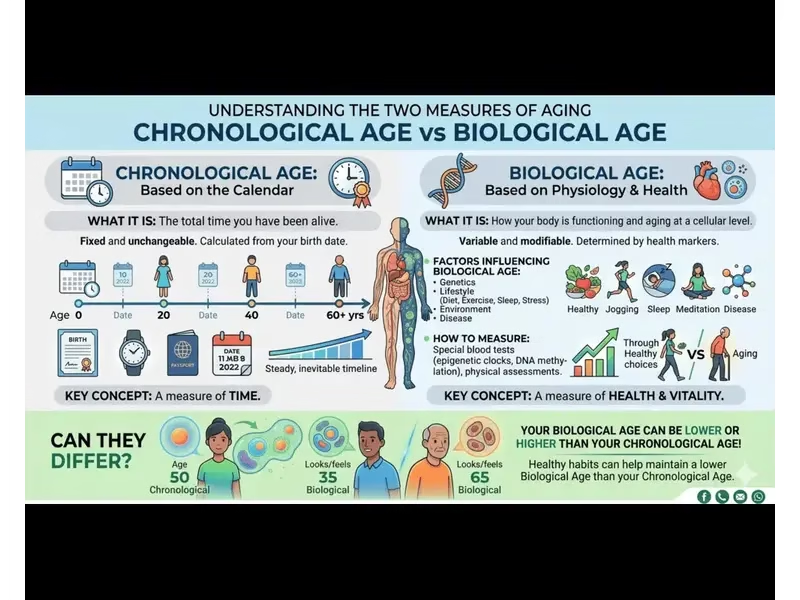
Chronological age vs biological age is an important topic that explains why people of the same age look different and have different health. This is because everyone has two types of age: your chronological age, which tells how long you have lived since birth, and your biological age, which tells how your body is aging and how old your cells and tissues are. Biological age can be reversed by maintaining a healthy lifestyle, unlike your actual age. Both ages, when combined, help track development, health status, and make lifestyle decisions.
What is chronological age?
The total amount of time passed since your birth is called chronological age or calendar age. It increases by a fixed amount each year, i.e., one year. It tells you your exact age in years, months, and days and is used in psychological assessment and to track developmental milestones. It is calculated by subtracting the date of birth from the current date. To calculate correct and exact age use this free chronological age calculator.
For more details, read this: “What is chronological age? Definition, examples, and uses.”
🧬 What is Biological age?
The overall condition of your body and health status is your biological age, also known as physiological or functional age. Your biological age predicts the age-related diseases, such as heart disease and type 2 diabetes. It also tells how long you will live. It helps individuals make lifestyle decisions to prevent age-related diseases. Biological age is affected by factors such as genetics, lifestyle, nutrition, and health. For example, two people, both of age 30, may look different: one who eats healthy, exercises, and does not smoke will look younger than one who eats poorly, is inactive, and smokes.
⚖️Chronological age vs Biological age(key differences)
| Features | Chronological Age | Biological Age |
| Definiton | years lived since your DOB. Your age | It depends on your body condition and health status, your cells’ age |
| Changeability | Cannot be changed or reversed | Cannot be changed or reversed Can slow down or increase depending on your lifestyle |
| Usage | Legal, health, education, and everyday use | show health status, risks of age-related diseases |
| Factors Affecting | only your birth day/ time | genetics, lifestyle, and environment |
| Testing Method | determined by calendar/birthdate | Physiological tests, telomere length analysis, and DNA methylation pattern analysis |
| Health Indicator | Actual age is not a strong indicator of health | Biological age is a useful indicator of health |
🔬HOW BIOLOGICAL AGE IS MEASURED?
Biological age indicates the potential health risks to your body. It can be determined through blood tests, telomere length analysis, analysis of a person’s DNA methylation and epigenetic changes (changes to DNA), and other biomarkers. If you come to know in tests that your biological age is greater than your actual age, that means your cells are aging fast. When cellular damage accumulates, aging occurs. Testing can give you insight into your biological age and health status.
🧪 Epigenetic test:-
Biological age is measured by the analysis of the DNA methylation pattern, which changes with age
🧬 Telomere Length:-
Telomeres are the ends of chromosomes that shorten with age. So the length of telomeres indicates your biological age.
❤️ Physiological Tests:-
Physiological Tests are done to check if organs are performing well, such as blood pressure, lung capacity, heart health, and joint movement.
📊 Key biomarkers:-
Key biomarkers reveal the function of organs such as the liver and kidneys, as well as inflammation, immune response, and blood sugar levels. All of these directly affect biological aging. It tells how fast you are aging.
🧮 How to determine chronological age?
Calendar age is calculated by subtracting the birth year from the current year. But due to leap years and varying days in months, i.e., 30 or 31, manual calculation can become complex. So there is a rough formula to find it. Formula: Age in days = (years × 365) + (months × 30) + days. For more details read this article “How to find chronological age manually“
Want to know your exact age? Try our Chronological age calculator. Simply input your Date of birth and testing or current date in YY/MM/DD format and press the calculate button to get your result.
HOW TO REVERSE BIOLOGICAL AGE?
People of the same age have different biological ages depending on lifestyle.
Unlike your calendar age, biological age can be reversed. For example, exercising regularly can slow biological age, while eating junk food can accelerate it. Biological age is affected by genetics, diet, sleep, stress, and the physical environment.
So if you want to slow down your aging, you need to take care of certain things listed below.
- Focus on a diet rich in fiber, vegetables, and protein.
- Prioritize sleep quality
- Exercise regularly
- Manage stress
- Reducing toxic exposure
- Optimization of hormones
- Quit Smoking
- Stay Hydrated
Importance of Biological Age:
It assesses the health and function of your organs and cells. Because increased biological age indicates the threats to one’s health and provides information about the possible health complications, you can decide your lifestyle based on your biological age or body condition.
If your cells are older,r they are more prone to diseases. The following diseases can be identified from your biological age.
- cancer
- heart disease
- diabetes
- dementia
- Arthritis
- Alzheimer
Importance Of Chronological age:
This type of age is important in tracking developmental milestones. It is important in the legal, education, and health departments. When everyone asks on your birthday, ” Hey, how old are you, you actually tell your chronological age. Psychologists and professionals need the exact age of their patients when testing them.
Is biological age more important than chronological age?
Biological aging gives more details about health and aging. Unlike your age in number, your functional age predicts risks of diseases more accurately, so you can maintain your good health. So, oh yes, biological age is more important. But you can’t neglect your calendar age because, to measure biological age, it is the most important factor.
Frequently Asked Questions (FAQs)
Conclusion:
Understanding chronological age vs biological age is important for maintaining health and better assessment. We need calendar age so we can compare it to our cellular age to see whether we are aging fast or slow. Biological age can be reversed so that it matches your actual age. Your exact age can be calculated easily using this free age calculator, and your biological age is determined through tests. Both are important and can’t be ignored if you want a complete health analysis.